Adding a coaster to a small theme park is different from buying one for a large park. Space is contested, capital is finite, and the ride has to earn its place from the first season. The wild mouse is usually the best answer at this scale because it delivers genuine thrill within a footprint a small park can actually spare – but only if the project is planned around the site rather than around a catalogue drawing.
This guide walks through the practical steps of adding a wild mouse roller coaster to a small park project, from the first site survey to opening day.
Step 1: Find the Real Footprint
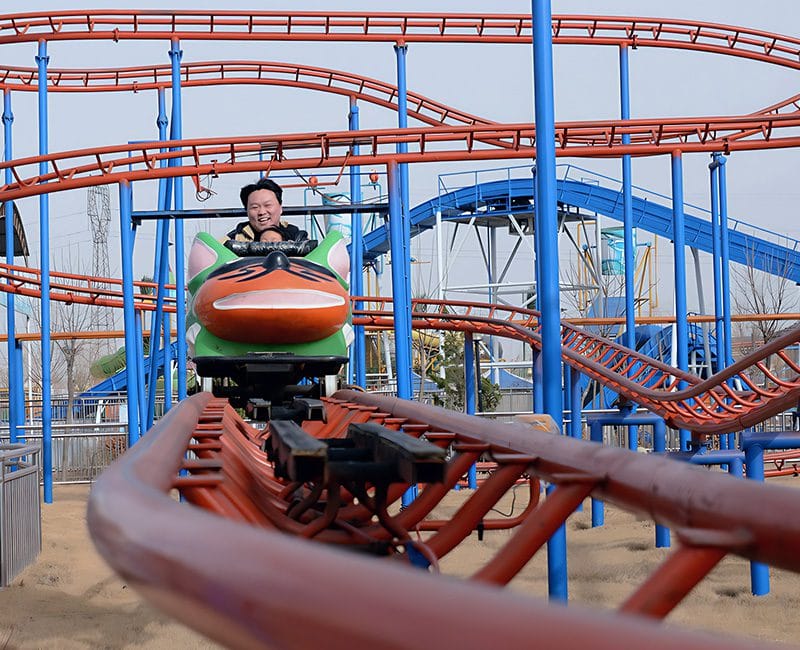
Before any supplier is contacted, measure what you can genuinely fence off. A wild mouse normally needs a fenced envelope of roughly 20 by 40 metres including the station, queue line and a maintenance access route – about 800 to 1,200 m². Check the clear height allowed by local planning rules, and commission a geotechnical report; soft ground or rock can change the foundation budget more than any negotiation on ride price.
If you are planning to add a wild mouse coaster to a small park, the layout should follow the site rather than the other way round. Walk the plot with the supplier layout drawing in hand and confirm that every support, service route and evacuation path fits the ground you actually have, not the ground in the brochure. Adjustments made at this stage cost nothing; the same adjustments after foundations are poured do not.
Step 2: Choose a Configuration That Fits the Crowd
| Park size | Suggested configuration | Why |
|---|---|---|
| Very small park or FEC | 180 – 220 m track, single 12-seat train | Lowest capital cost, fits a tight site |
| Small park with weekend peaks | 220 – 260 m track, single train plus expansion provision | Room to add a second train later |
| Growing family park | 220 – 280 m track, two trains | Higher throughput and shorter queues |
Plan the station and brake run so a second train can be added without rebuilding the platform. The incremental cost at installation is modest; retrofitting it later is not.
Step 3: Check the Structure and Safety Package
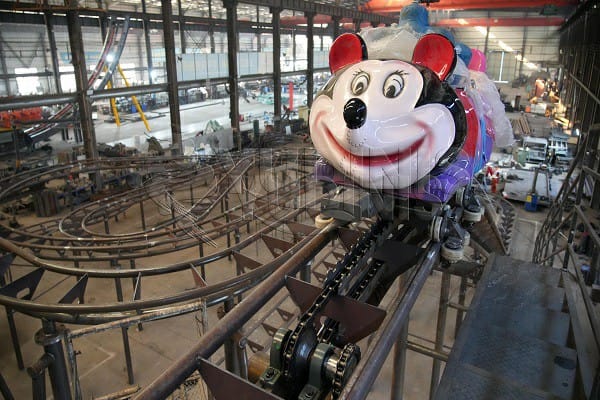
Track and support steel is normally protected by hot-dip galvanization before primer and topcoat. That process decides how the structure survives humidity, rain and dust, so ask which standard it is done to rather than accepting a colour sample. Confirm the restraint type, brake assemblies and control logic, and insist on the certification package your local inspector will ask for.
Step 4: Integrate the Ride into the Park Plan
A coaster dropped into a spare corner rarely performs as well as one designed into the circulation. Plan the queue so it does not block a main path, position the station near food and beverage, and give the ride a visible profile from the entrance – height does the marketing. Landscaping, paving and a themed queue line change how the same hardware is perceived and cost a fraction of the ride itself.
Step 5: Budget Beyond the Ride
- Foundations, anchor plates and the station building: 10 – 20 percent of delivered cost
- Fencing, lighting and electrical supply
- Ticket integration and queue-line signage
- Initial spare parts stock and workshop tools
- Launch marketing and staff training
For a small park, the delivered cost of a wild mouse roller coaster for sale is only meaningful once those lines are included. Comparing quotations on the ride alone is the most common way small projects run over budget.
Step 6: Plan the Opening Season
Commissioning should finish at least four weeks before opening so operators can run empty cycles, complete training and rehearse evacuation procedures. Staff the ride with trained operators from day one, keep a maintenance log from the first cycle, and schedule the first inspection before the peak season rather than during it. A new coaster lifts food and beverage sales across the whole park, so brief the other departments as well.
Common Mistakes in Small Park Projects
- Buying before the geotechnical report, then discovering piling costs
- Under-sizing the station so a second train can never be added
- Placing the ride away from circulation and wondering why the queue is short
- Skipping the documentation package and failing the local inspection
- Comparing delivered prices without normalising freight and duty
Frequently Asked Questions
How much does it cost to add a wild mouse coaster to a small park?
A standard single-train layout typically ranges from USD 180,000 to 450,000 ex-works, with site works, station, freight and installation adding 20 to 35 percent depending on the country.
How long does the project take?
Production is usually 60 to 90 days for a standard layout, foundations and site works two to four weeks, erection three to five weeks, and commissioning two to three weeks before opening.
Can it be installed inside an existing building?
Possibly, but ceiling height, floor loading and emergency egress all need engineering assessment. An outdoor installation is usually simpler and cheaper unless the building was designed for a ride.
Adding a Coaster to Your Park?
Send us your site dimensions, the guest profile you expect and the opening date you are working towards, and we will propose a configuration that fits. To compare a specific layout in detail, click here. As an experienced roller coaster manufacturer, we publish the scope – track length, trains, control system and documentation – before the contract, so a wild mouse roller coaster from Dinis can be compared fairly against every other offer you hold.
Leave a Reply