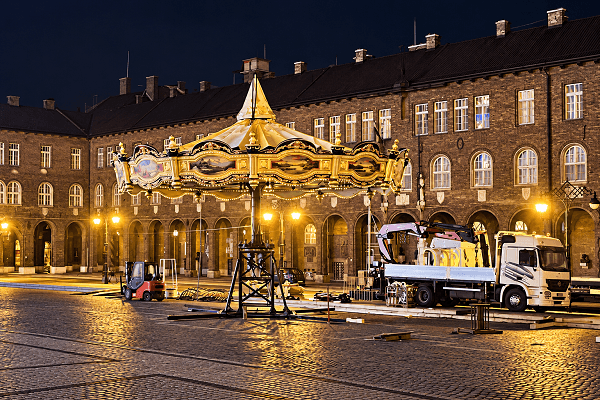
A carousel installed inside a working shopping centre has to be built without closing the centre, which turns the installation into a scheduling problem as much as an engineering one. The right sequence keeps the atrium usable while the ride takes shape. This guide explains how to plan a double decker carousel installation that avoids weeks of closure.
Survey the Atrium While It Is Busy
Measure the site during trading hours, not only at night when the centre is empty. Record the walking routes, the fire exits, the delivery access and the points where shoppers naturally stop, then draw the ride and its temporary works around those constraints. The survey should also confirm the floor capacity, the ceiling height and the position of overhead services before the schedule is written.
Separate the Work Into Phases
A double decker cannot be assembled in a single delivery, so the programme should split into base preparation, delivery, structural assembly, electrical connection, decoration and commissioning. Each phase has a different footprint, and planning them in sequence lets the centre keep most of the atrium open. Publish the phase dates to tenants early so that promotions and deliveries can be arranged around them.
Build the Base Without Blocking Egress
The base is usually the messiest stage, because it involves concrete, curing and heavy lifting. Schedule it for the quietest trading hours and keep a protected route to every fire exit throughout. Where the floor cannot be broken, a load-spreading steel frame may replace the poured base, which changes the sequence but reduces dust, noise and downtime.
Deliver Sections on a Timed Plan
The largest carousel sections must enter the building through a route that may include loading bays, lifts and corridors. A timed delivery plan, agreed with the centre’s operations team, avoids two problems at once: components blocking the atrium for days and deliveries arriving before the previous stage is ready. Careful attention to installing a double decker carousel in a mall also means protecting floors and shop fronts along the route.
Commission Behind a Temporary Barrier
Once the structure is up, electrical testing, restraint checks and ride trials all need a protected work zone. A temporary barrier with company branding turns the construction site into a preview of the attraction, and it keeps shoppers at a safe distance during test runs. Invite the centre’s safety officer to sign off each stage before the next one begins.
Plan the Opening and the Handover
The final phase is staff training, signage, ticketing and a soft opening. Reviewing shopping mall carousel projects shows how other operators have handled the transition from construction site to trading attraction, including the temporary barriers and the launch events. The engineering principles behind an indoor installation are summarised in general material on carousel assembly and setup, which helps the project team explain each stage to the building owner.
A double decker can be installed in a working mall without closing it for weeks when the sequence is planned around trading hours. Survey the atrium in use, split the work into phases, build the base without blocking egress, time the deliveries, commission behind a barrier and plan the handover. Operators planning an indoor ride can review the range from Carousel Manufacturer installation team and open the product page at https://www.carouselmanufacturer.com/product/double-decker-carousel-ride-for-sale/.
Leave a Reply