Define the Document Set Before Comparing Suppliers
A strong supplier checklist begins with a practical question: can the operator trace every attraction from the approved drawing to the installed equipment and the daily inspection routine? Buyers who wait for final delivery to request paperwork often receive incomplete files after installation crews have left the site. A usable FEC equipment safety documentation checklist should therefore be agreed during procurement, with named owners, file formats, delivery dates, and acceptance criteria. Separate the request into commercial, technical, installation, and operational evidence. Commercial documents establish who supplied what and which revision was approved. Technical documents describe the configuration, materials, finishes, loads, fall zones, and test methods. Installation records prove how the equipment was assembled and inspected. Operational documents tell staff how to clean, inspect, maintain, and respond to defects. Giving the supplier one combined list at bid stage makes the evidence package comparable across proposals and prevents an attractive quotation from hiding expensive documentation gaps later.
Verify Product Identity and Traceability
Traceability should be visible on labels, drawings, packing lists, and replacement-part schedules. A purchase order number alone is not enough: the operator needs a model or project reference, approved drawing revision, equipment location, manufacturing batch where relevant, and date of delivery. For a multi-zone FEC, the same slide model may appear in several places with different heights or finishes, so photographs and serial or asset tags should distinguish each installed unit. The supplier should explain how a replacement component will be matched after several years of operation. A reliable playground supplier compliance documentation package also records material declarations, coating systems, fastener grades, and spare-parts references. Check that the description on the certificate matches the product that arrived, rather than a broader family name that leaves the actual configuration unclear. Request a revision-control page and a document index. A clear index lets maintenance staff find the correct assembly diagram, part number, or inspection limit without searching through unlabelled folders.
Review Engineering and Installation Evidence
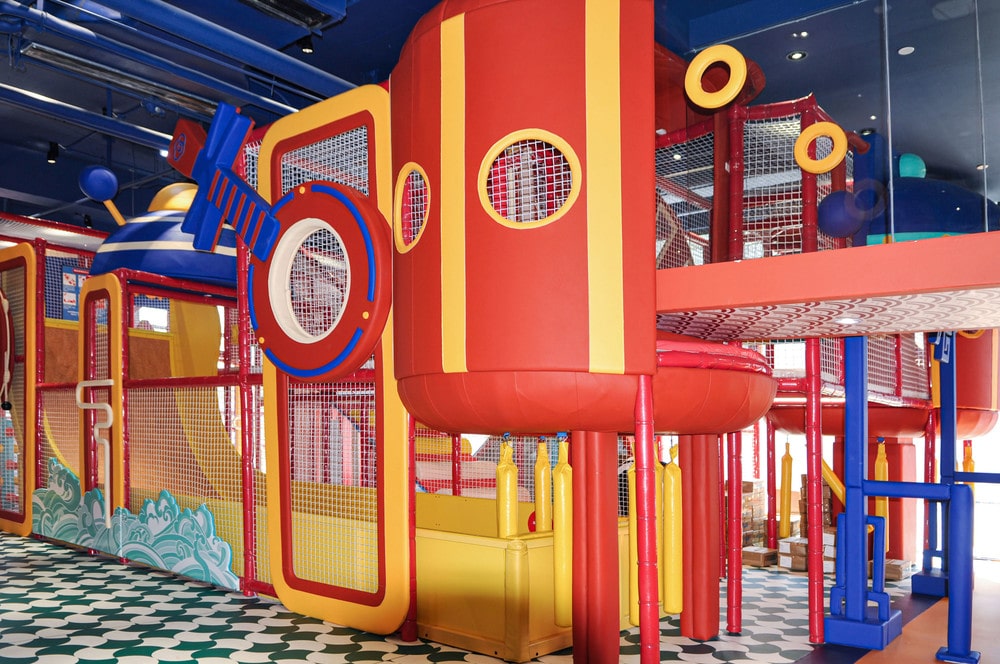
Engineering evidence should connect the venue’s constraints with the structure that will be built. Ask for structural calculations, anchor and load information, clear-height requirements, fall-zone dimensions, and the assumptions used by the designer. The documents should also identify interfaces with columns, floors, walls, ceilings, barriers, and adjacent attractions. Installation evidence is equally important: method statements, torque values, alignment checks, cable tensions, sealant details, and sign-off sheets should match the approved drawing. When an attraction mixes climbing platforms with multi-level indoor adventure play equipment, the review must include every transition between systems rather than treating each catalogue item in isolation. Photograph concealed fixings and completed safety barriers before they are covered or decorated. Record any approved site deviation and obtain the designer’s confirmation. A complete package does not need to be enormous, but it must make the final installed condition auditable by someone who was not present during installation.
Connect Standards With the Actual Attraction Mix
Safety references must follow the attraction mix instead of appearing as a generic logo on a sales sheet. Slides, soft play, trampolines, climbing walls, ropes courses, ninja lanes, and electronic games may call for different test methods, operating controls, and maintenance practices. Create a matrix listing each attraction, its intended age range, applicable standard or local rule, evidence type, and responsible reviewer. Keep product certifications separate from building approvals and from the operator’s own risk assessment. The matrix should name the edition of each standard actually used and flag any assumption that still needs local verification. An experienced Miland indoor playground manufacturer can help align the technical file with the drawing set and operating plan, but the venue still needs a competent local review of fire, egress, electrical, accessibility, and authority requirements. Require test reports for the tested configuration, not simply a certificate of conformity for a related product. If a rule is not applicable, record why. A documented exclusion is safer than leaving the matrix blank.
Reconcile Delivery Documents With the Built Venue
Delivery is the moment to reconcile the promised file with the physical venue. Schedule a document handover alongside the mechanical completion walkthrough, and use the same equipment tags in both activities. Confirm that the as-built layout reflects the slides, barriers, and access routes that were actually installed. Update maintenance schedules if the final configuration changed. Record the location of emergency stops, access panels, inspection points, and replacement parts. Keep signed installation checks, photographs, and material records with the operating manual. Link the safety file to the facility’s asset register so a defect report can reference a specific unit rather than a general play area. Before opening, test the file with the people who will use it: ask a supervisor to locate the cleaning method, a technician to find a spare-part reference, and a manager to identify the escalation route for a damaged component. If those tasks are slow or ambiguous, revise the index and train the team rather than adding more paperwork. The best supplier documentation is concise, searchable, and directly connected to decisions staff make on the floor.
Create a Living Safety File for Operations
A safety file remains useful only when it evolves with the attraction. Set a review cycle for inspection forms, maintenance intervals, staff training, spare-parts availability, and supplier contacts. Log every repair, approved modification, replacement, and incident investigation so the current configuration never becomes detached from its original evidence. Use guidance such as occupational safety and health principles to build consistent risk controls, while keeping playground engineering, local law, and manufacturer instructions as the controlling requirements. Treat incomplete documents as a procurement action with an owner and deadline, not as a permanent administrative backlog. During annual reviews, verify links to digital files, confirm that drawings are still legible, and retire superseded revisions. When new equipment is added, extend the same numbering, standards matrix, and inspection system. This discipline protects guests, gives maintenance teams clear instructions, and supports insurance or authority reviews with traceable evidence. Categories: Family Entertainment Center, Indoor Playground, Playground Safety, Commercial Playground Equipment, Standards And Compliance, Facility Operations. Tags: FEC safety documentation, supplier checklist, playground compliance, safety file, equipment procurement, facility operations. https://www.milandplay.com/faq-items/which-safety-standards-apply-to-commercial-indoor-playgrounds-and-fec-projects/
Leave a Reply