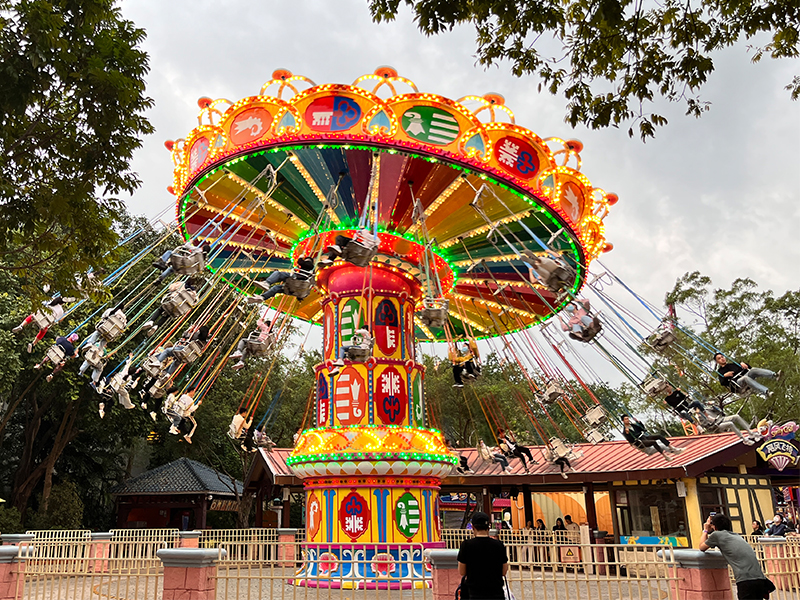
A wave swinger looks like a mechanical ride, but on a small site it is often the electrical supply that decides whether the project is feasible. The motors, lighting and control system draw current continuously through the operating day. This guide explains what to confirm about the wave swinger ride power supply before the ride is ordered.
Start With the Connected Load
Ask the manufacturer for the connected load, the running load and the starting current of the drive. The starting current is usually higher than the running figure, and it can trip a marginal supply even when the ride operates comfortably once it is moving. Compare those numbers with the capacity of the existing substation and the spare capacity available at the proposed position.
Check the Distance to the Supply
A ride can be electrically sound and still be expensive to connect if the nearest suitable supply is on the other side of the park. Measure the cable route, including any trenches, crossings or existing services, and ask the electrical contractor for the voltage drop over that distance. A long run may require a larger cable or a local transformer, both of which change the budget.
Plan the Control and Distribution Equipment
The ride needs a control panel, isolation points and protection devices that suit the local electrical code. Confirm where the panel will sit, how it will be protected from weather and how a technician can reach it without entering the swept area. A compact site often leaves little room for this equipment, so it should be included in the layout from the start.
Consider Lighting and Ancillary Loads
The 36 seat swing ride electrical load is not only the motor. Lighting, signage, ticketing equipment, audio and any charging points all draw from the same supply. Add those loads to the calculation, and allow a margin for future additions. Parks that plan only for the ride frequently run out of capacity when they add evening lighting or a new ticket kiosk.
Compare the Options for a Constrained Site
Where the existing supply is limited, the options include upgrading the substation, running a dedicated feed, or choosing a model with a lower connected load. Reviewing an ocean themed swing ship models range shows how different swing rides compare on power and footprint. The electrical principles behind these choices are described in general engineering material, and the structural context of the ride is summarised in reference material on swing ride structure.
Budget the Connection, Not Just the Ride
Finally, include the connection cost in the investment case. Cable, trenching, switchgear and any substation upgrade can be a significant share of the project, especially on a site far from the main supply. A clear electrical budget prevents the common situation in which the ride is purchased and then sits waiting for a supply that nobody costed.
Power supply decides feasibility on a small site. Confirm the connected and starting load, measure the cable route, plan the control equipment, add ancillary loads, compare alternatives and budget the connection. Operators can review the range with ThemeParkProjects ride engineering team and start from the product page at https://themeparkprojects.com/36-people-wave-swinger-ride/.
Leave a Reply